
The Novel’s Two Forms of Witness
The Zone of InterestThis thread contrasts the perpetrator’s self-serving records with the prisoners’ dangerous efforts to leave truthful accounts of what happened.
increasing Bearing strength in each event
 decreasing
Bearing strength in each eventdecreasingDoll’s Private Notes
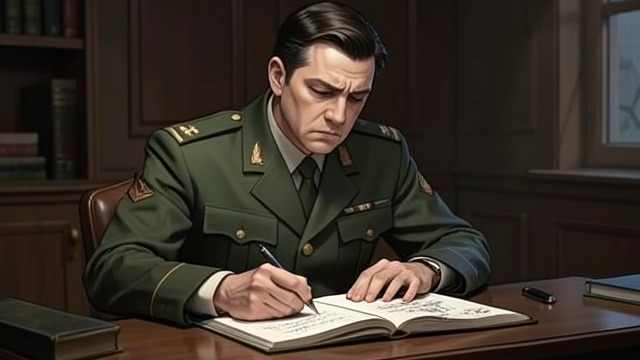
Doll’s Private Notes
A diary records the perpetrator
Paul Doll writes about headaches, meals, staffing, and administrative burdens while describing killing operations as ordinary work. His notes preserve a voice that does not recognize itself as monstrous.
The record exposes what it denies
Doll’s writing repeatedly reveals the gap between his self-image and his actions. Its very confidence becomes evidence of the moral blindness he tries to maintain.
Szmul’s Account of the Dead
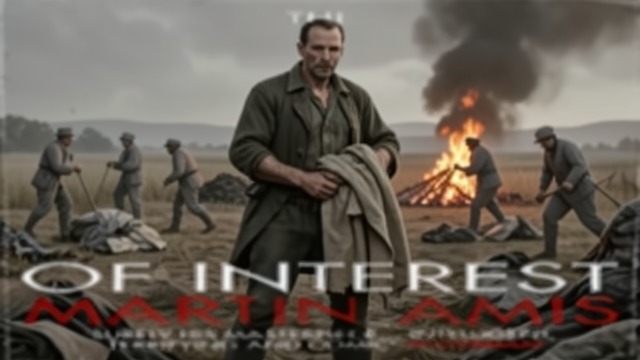
Szmul’s Account of the Dead
A prisoner records what he sees
Szmul describes the Sonderkommando’s work, the victims’ possessions, the pyres, and the loss of human connection among the workers. His testimony is shaped by direct involvement and profound coercion.
Witnessing is not simple
He cannot claim innocence, yet he also rejects the idea that the prisoners freely chose the work. His account tries to hold both the truth of the crime and the truth of compulsion.
Josef’s Words Are Disputed
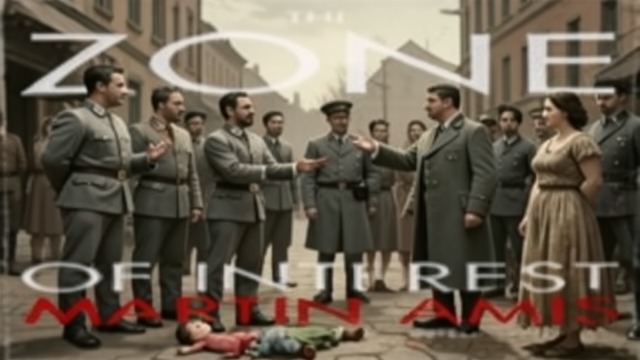
Josef’s Words Are Disputed
Testimony draws resistance
The Sonderkommando prisoners interrupt Josef’s account because its imagined children’s speeches do not ring true to them. Their objections concern how the story represents people trapped in the same conditions.
Accuracy matters under horror
They do not reject the underlying murder. They fear that a false or sentimental description may distort what happened and the choices that were denied to them.
The Hidden Writings

The Hidden Writings
A record is buried
Szmul hides his writings in a thermos beneath a bush before going to the garden. He intends to leave something that may survive the destruction of his body.
The future reader is uncertain
The writings may be lost, but hiding them resists the camp’s effort to control all memory. The act places hope in a reader who does not yet exist.
The Postwar Search for Truth
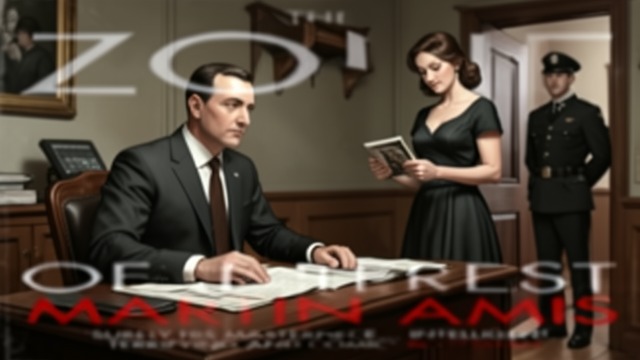
The Postwar Search for Truth
Records become evidence
Thomsen works on compensation claims while searching for Hannah and trying to understand the past. Postwar investigation turns testimony and paperwork into tools for identifying harm.
Witness does not equal absolution
The effort to document crimes is necessary but cannot erase the witness’s complicity or restore the dead. The novel ends with truth as a continuing obligation rather than a completed judgment.
August 1942, as Doll begins recording his thoughts
Autumn 1942, during the Sonderkommando testimony
Autumn 1942, during the reading of the buried manuscript
April 1943, before Szmul’s death
1948, as Thomsen works on reparations
